 yroByte
Product design
Our product designer turns an idea into a clear experience. Figma flows, prototypes, and design systems give the team a shared language before implementation begins.
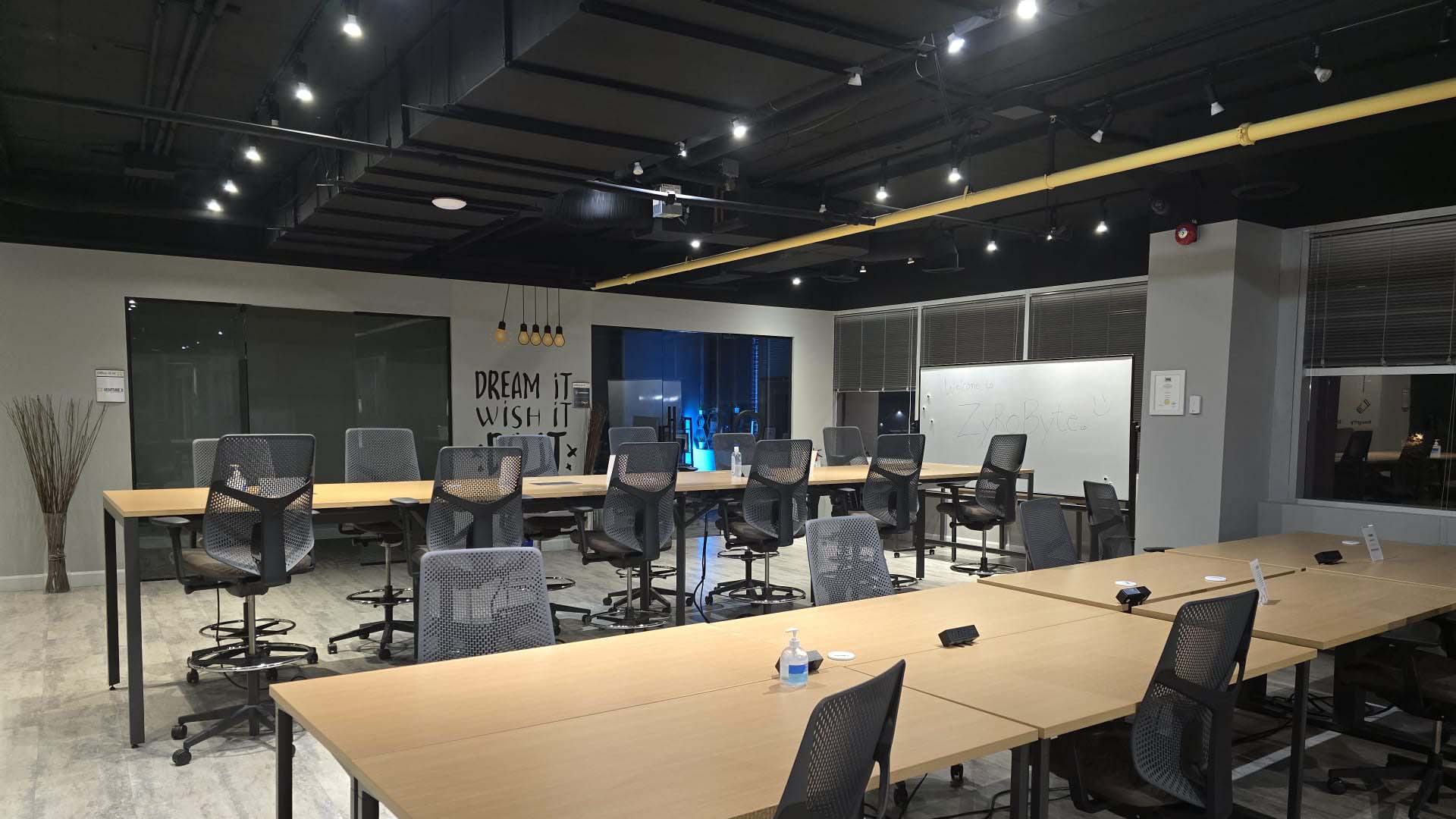
About ZyroByte
Original thinking. Thoughtful design.
Engineering that goes all the way down.
Who we are
ZyroByte brings product design, application development, and systems engineering into one team.
We design in Figma, build expressive frontend experiences, and write native applications. Our work also reaches deeper: operating systems, algorithms, firmware, and microcontroller design and development.
That range changes how we solve problems. We can follow an idea from the way a person uses a screen to the way a processor executes an instruction—and make better decisions at every layer in between.
Bring us your ideaOur range
We approach a project like an architect: understand its purpose, map its constraints, and design how every part will work together.
An interface, an application, a distributed platform, or an embedded device—each belongs to a larger system. We design with that whole picture in mind.
Product strategy, Figma prototypes, interaction design, and frontend engineering. Clear journeys, considered details, and interfaces that feel natural.
Native applications, APIs, data models, and scalable systems. Deliberate boundaries, reliable communication, and architecture that can grow with the product.
Low-level operating systems, firmware, and microcontrollers. We work with memory, concurrency, timing, and hardware constraints—not just the abstractions above them.
The people behind the work
Our product designer and engineering teams work through the same problem together. Design decisions meet technical reality early; implementation stays connected to the people who will use it.
Our product designer turns an idea into a clear experience. Figma flows, prototypes, and design systems give the team a shared language before implementation begins.
Our frontend team brings that experience to life through responsive interfaces, accessible interactions, and careful attention to performance and detail.
We build native applications and the services behind them: architecture, algorithms, data flow, and the connections that make a complete product behave coherently.
We work close to the machine, across operating systems, microcontroller design, and firmware. Understanding the fundamentals helps us reason through unfamiliar challenges.
Engineering with intent
We aim to get useful work from the hardware your application runs on. That means measuring CPU time, memory, I/O, and latency, then improving the bottleneck that actually matters.
Efficient software leaves room to grow. We choose dependencies deliberately, keep unnecessary work out of critical paths, and preserve headroom for real demand.
We examine how time and memory requirements grow with the workload. The right data structure or algorithm can do more than another layer of infrastructure. When the problem calls for it, we design the algorithm ourselves.
More cores cannot eliminate a serial bottleneck. We use profiling to identify work that can run concurrently, weigh coordination costs, and improve the parts that limit overall speed.
Explore Amdahl’s Law ↗During a network partition, a distributed system cannot guarantee both strong consistency and availability. We make that tradeoff explicit, based on what the product and its users need to trust.
Explore the CAP theorem ↗We break complex problems into focused modules with clear interfaces. Each part can be reasoned about and tested independently, while integration tests check that the whole system still works together.
How we build
Complexity becomes manageable when the problem is understood, the boundaries are clear, and every contributor knows how their work fits the whole.
Start with the people, the desired outcome, and the constraints. Question assumptions before they become expensive decisions.
Map the experience, data, interfaces, and dependencies. Break the work into focused pieces with clear ownership across the team.
Designers and engineers work on their areas of expertise against shared contracts. Review, test, and integrate throughout development.
Bring the pieces together. Check the user journey, exercise failure paths, measure performance, and refine what the evidence reveals.
Fast to a first product. Ready for what follows.
We move quickly by finding the smallest complete experience that proves the idea. Tight scope, a shared design, and well-defined interfaces let the team make progress together.
Originality is our specialty. We reason from fundamentals, understand how the layers interact, and shape the solution around your problem. The goal is a useful first release with a clear path to evolve as you learn.
Tell us what you have in mind.