Loading...
Black glass communications node on a plinth, cyan light filaments linking a phone, laptop, camera, and headset

Realtime communication

Radios.
Dispatch.
Packets.

4G walkie-talkies for police officers and security guards, the software on the handset, and the command floor that hears every talk group. Unit GPS. Authorized post and incident video. Chat, game servers, VPNs. Built for the cell you actually have — including countries where analog radios die at two kilometres.

Quoted for ministries, national police, private security, and product teams. Work ships under NDA. We show what we know, not who we built it for.

Public safety & security

Officers and guards on one talk group

The lead program is operational command-and-control: national and municipal police, private security, and joint floors where officers and guards have to hear each other now. Monitoring means the units and posts you issued — location, duty state, an incident channel. Authorized video on a checkpoint or a body camera when the operation requires it. Not a product for watching the public at large.

Push-to-talk over cellular

MCPTT / PoC on 4G LTE today, 5G when the carrier or private core is there. Instant floor control, emergency button, and talk groups that span a city or a country.

Unit location & status

Issued devices report position, battery, and duty state to dispatch. Controllers see who is on a post, who is moving, and who has gone quiet — not a civilian tracking product.

Authorized live video

Body, vehicle, checkpoint, or post cameras on an incident channel when the operation requires eyes. Roles, audit, and a reason to look — not a dragnet on the public.

Roles, audit, encryption

Who can hear a group, who can start a call, who can pull a replay. TLS on the path; E2E where the program requires the server not to read content.

National & municipal programs

Stand up a country’s field comms

A ministry or a security firm does not buy a chat app. They buy radios that work, a floor that sees the force, and a path that survives a dropped cell. We quote that as one program — then the same session layer can take a second city, and a second country.

Issued 4G handsets

PoC radios, vehicle units, speaker mics. One button, a talk group, nationwide coverage over the cell that is actually there — not a 2 km analog bubble.

Police and guards, jointly

Separate groups for officers and for site security, plus a joint channel when an incident needs both. Dispatch hears the floor you authorize — not every radio in the country at once.

Monitor the units you issued

GPS, duty state, battery, last heard. A controller sees posts, patrols, and quiet radios. That is operational monitoring of your force — not a product for watching civilians.

Authorized field video

Checkpoints, gates, vehicles, and body cameras on a channel when the operation requires it. Replay is role-gated and audited. We do not build intercept of civilian phones.

Built for thin coverage

Dual-SIM, Wi-Fi into the same talk groups, store-and-forward when the tower dies, reconnect that does not dump the incident. Designed for the network you have, not a lab in Toronto.

City, then country, then more

A municipal floor first, a national program next, then a second country on the same session layer. Local SIM policy, regional connection points, one command model.

4G, 5G, 6G

The radio is a transport. Keep it on this page.

You do not need a separate “5G service.” PTT, dispatch, and field apps sit on whatever RAN is there. We pick LTE, a private 5G slice, or a 6G roadmap the same way we pick UDP or TCP: by latency, coverage, and failure mode.

Today

4G LTE

The workhorse. Nationwide PoC radios, dual-SIM, Wi-Fi fallback, GPS. Most national PTT programs we quote still ship on LTE because coverage exists and the chipsets are cheap and proven.

Now / private cores

5G

URLLC, network slicing, and private campus 5G for a port, a mine, a stadium, or a ministry compound. Same apps. Tighter latency budget. MCPTT over 5G when the core supports MCX.

Roadmap

6G

Not a product you buy yet. We keep the session layer (PTT, signaling, media) independent of the radio so a 6G RAN is a transport swap, not a rewrite of dispatch.

What we build

From a handset to a dedicated server

Public-safety radio is one product on this floor. The same team ships messengers, calls, game netcode, and overlays. Starting prices in CAD for a scoped production slice.

Field radio and command interface linked by light filaments

4G / LTE walkie-talkie

Push-to-talk hardware and the software that sits on it. One button, a talk group, nationwide coverage over cellular — not a 2 km analog radio.

from $15,000 CAD

Start 4G / LTE walkie-talkie
Ultrawide monitor showing a live mesh of glowing event nodes

Dispatch & command

The screen a controller works from: units on a map, talk groups, incident channels, replay. Police, guards, and site security on one floor.

from $18,000 CAD

Start Dispatch & command
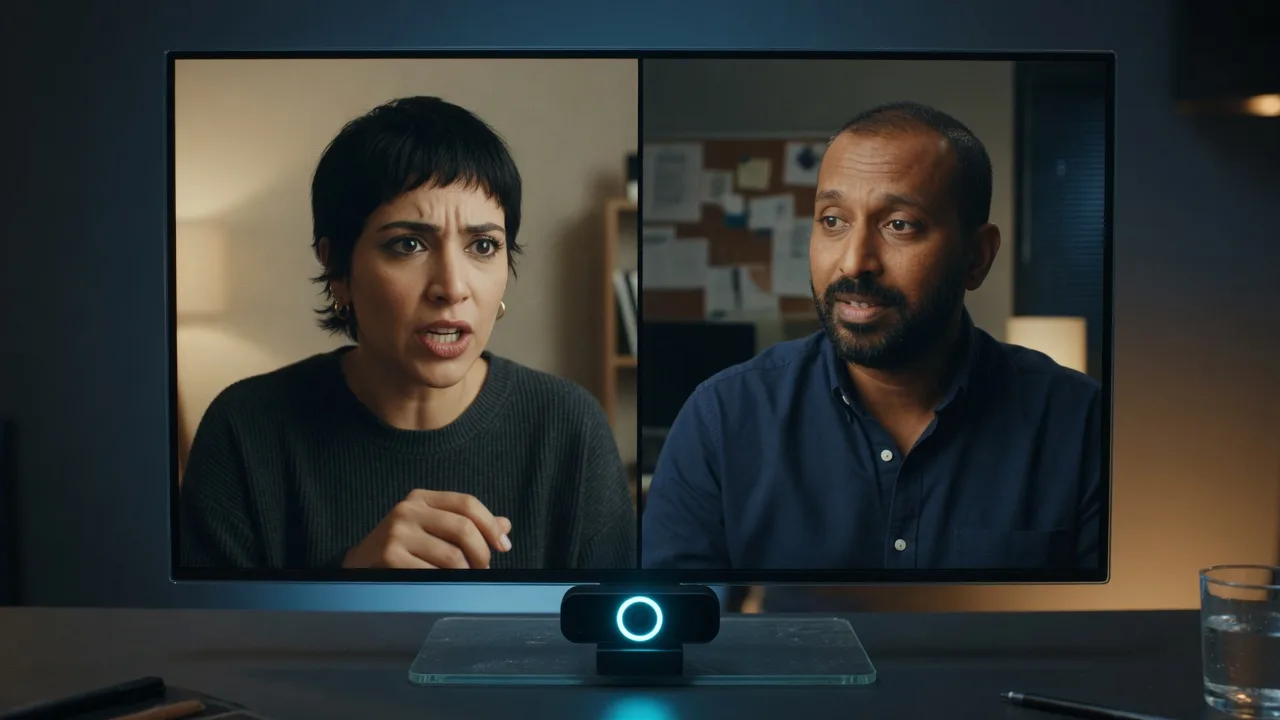
Two-person video call with a webcam and headset on the desk

Voice, video & chat

Officer-to-officer and guard-to-command: PTT, 1:1 calls, group video, and a message thread that survives a dropped cell.

from $12,000 CAD

Start Voice, video & chat
Two smartphones exchanging a stream of glowing cyan message pulses

Chat & messaging

1:1 and group threads, receipts, typing, media, and offline catch-up — the socket layer behind apps in the WhatsApp class.

from $8,000 CAD

Start Chat & messaging
Central hub node fanning streams out to many endpoints

Game servers & netcode

Authoritative servers, tick rate, interest management, and the UDP path that keeps a match honest when packets arrive late.

from $10,000 CAD

Start Game servers & netcode
Cyan data cubes transferring between a laptop and a smartphone

VPN & overlay networks

Encrypted tunnels, mesh overlays, and split routing so field devices, game peers, or a private 5G island talk only on the path you own.

from $6,000 CAD

Start VPN & overlay networks

Also on this floor

Netcode, VPNs, mesh, multi-country

Custom game servers

Dedicated and player-hosted. Tick, snapshot, delta compression, anti-cheat hooks. UDP for state, TCP or WebSockets for lobby and chat.

Packets, not frameworks

Binary protocols, sequence numbers, NACKs, jitter buffers. We write the wire when Socket.IO is the wrong shape.

VPNs and meshes

WireGuard-class overlays, split tunnels, per-device keys, kill switches. Field radios, game peers, or a remote office on one fabric.

MQTT, NATS, Kafka

Telemetry and fan-out for fleets, IoT, and live ops. Constrained devices get MQTT. Hot channels get a bus that will not melt.

Mesh & offline radio

When the tower is gone: device-to-device, store-and-forward, and a reconverge when coverage returns. Analog fallback is a hardware option, not a software miracle.

Multi-country programs

Regional connection points, local SIM policy, and a command floor that can see more than one city. Quoted as a program, not six stacked chat apps.

The four transports

SSE, WebSockets, WebRTC, or raw sockets

A radio program uses MCPTT for the button, WebSockets or a binary socket for signaling, and UDP for media. A messenger uses the same menu. You almost never pick one.

One-way · HTTP · TCP

Server-Sent Events

The server pushes. The client listens. Resume from the last event id is free.

Use for Live feeds, unit status, logs, tickers.

Skip for Anything the field must send in realtime — PTT, chat, commands.

Two-way · TCP

WebSockets

A persistent connection. Either side sends. Ordered and reliable. Reconnect is on you.

Use for Chat, presence, dispatch signaling, bot commands, WebRTC signaling.

Skip for One-way feeds (SSE) and audio/video media (WebRTC / UDP).

Peer-to-peer · UDP

WebRTC

Media and data between peers or through an SFU. UDP so a late frame is dropped, not stalled.

Use for Voice, video, screen share, P2P files, some PTT media paths.

Skip for Ordinary text. Guaranteed, ordered messages belong on TCP.

Native · radio · games

TCP, UDP, MCPTT

Handsets, vehicle units, and game clients are not browsers. Raw sockets, MQTT, or 3GPP MCPTT over LTE/5G.

Use for PoC radios, IoT telemetry, game state, custom binary protocols.

Skip for Browser-only products — use WebSockets, SSE, or WebRTC.

How we work

Map the talk groups. Then pick a wire.

1

Map the talk groups

Who speaks to whom, who is allowed to listen, what an emergency button does, and what dispatch must see. That catalog is the contract.

2

Pick the radio and the wire

LTE PoC, private 5G, WebRTC, WebSockets, UDP tick — chosen against coverage, latency, and whether a late packet is worse than a lost one.

3

Build hardware, apps, and the floor

Handsets and firmware if the program needs them. Officer/guard apps. The dispatch console. Load-tested with realistic concurrent units.

4

Ship and observe

Delivery, floor-grant time, location freshness, and connection health on a dashboard from day one. Realtime you cannot see is not realtime.

Questions

Before a radio ships

If you are standing up police and guard comms in a country with thin coverage, adding calls to a product that already chats, or quoting a dedicated game server — these come first.

Can you stand up police and guard comms in a country with thin coverage?

Yes — that is the lead program. Issued 4G PoC radios for officers and security guards, talk groups (police, guards, joint), a dispatch floor with unit GPS and duty status, and authorized post or incident video. Dual-SIM, Wi-Fi into the same groups, store-and-forward when the tower dies. Analog is a 2 km bubble. Cellular PTT is a national network. We quote the radios, the firmware, and the command software as one engagement.

Can you build a 4G walkie-talkie for police or security guards?

Yes. Hardware (PoC / MCPTT handsets, vehicle units, speaker mics) plus the talk-group server, emergency button, GPS to dispatch, and the controller floor. Coverage is the carrier’s LTE (or a private core), not a 2 km analog bubble. We quote the radio, the firmware, and the command software as one program.

Is this for monitoring officers, or for watching the public?

Issued devices. Dispatch sees units you gave a radio or an app: location, duty status, talk groups, and — when the operation requires it — a camera on that device or post. That is command-and-control of your force. We do not build intercept of civilian phones, IMSI catchers, or population-scale dragnets. Those are a different industry, and not this page.

Should 5G and 6G be a separate service?

No. 4G, 5G, and 6G are radios under the same session: PTT, signaling, media, dispatch. 5G matters when you need URLLC, a private slice, or MCX on a 5G core. 6G is a roadmap item — we keep the app layer independent of the RAN so the radio can change. A separate “5G page” would sell spectrum and towers. We sell the system that runs on them.

Can this run in countries with weak coverage?

That is the usual case. Dual-SIM, Wi-Fi calling into the same talk groups, store-and-forward when the cell dies, and a reconnect that does not dump the incident channel. We design for the network you actually have, not a lab in Toronto.

Do you also build consumer chat and video apps?

Yes. WhatsApp-class messengers, Telegram-class channels and bots, WebRTC calls, and live event feeds. Same transports: WebSockets, SSE, WebRTC, TCP, UDP. Public-safety PTT is one product on that floor, not the only one.

What about game servers?

Authoritative dedicated servers, tick rate, interest management, client prediction, and the UDP path for state. Lobbies, chat, and persistence can ride TCP or WebSockets. Custom protocols when a generic relay is the wrong shape.

VPNs — are those realtime communication?

They are the overlay the packets ride. Field radios, a private 5G island, game peers, or a remote command post often need a tunnel or a mesh before the PTT or the tick even starts. We build that fabric when the product requires it.

How is this priced?

Starting prices in CAD for a scoped production slice. Live events from $2,000. Presence from $3,000. VPN overlays from $6,000. Chat from $8,000. Game servers from $10,000. Voice and video from $12,000. 4G PTT from $15,000. Dispatch and command from $18,000. A national radio-plus-dispatch program is quoted as one engagement, not a stack of line items.

Ready to go realtime?

Police radios, a dispatch floor, or a custom server?

Tell us who is in the field — officers, guards, or both — how bad the network gets, and what has to arrive now. We will propose the radios, the transports, and the engagement around that.

Top