 yroByte
Push-to-talk over cellular
Connect issued radios over cellular with talk groups, floor control, and emergency workflows. Carrier coverage and private-network requirements are scoped for each deployment.
Security communications
Connect the people in the field with the people making decisions. Purpose-built radios, dispatch software, and secure communications. Engineered as one.
Private by design. NDA by default.
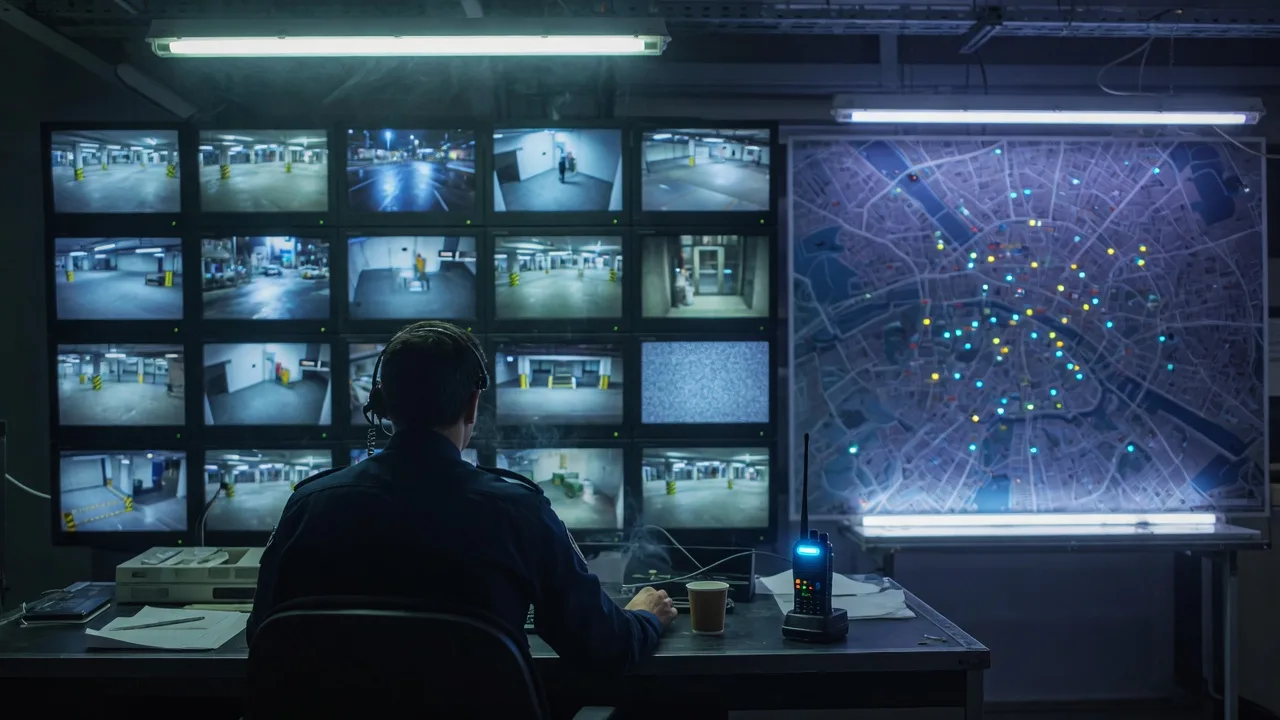
01 / The command experience
Explore how dispatch, personnel, and communications come together. Select a unit to try its radio, message, and call workflows.
02 / One connected system
Give your teams a clear line to one another, and your controllers the context to act.
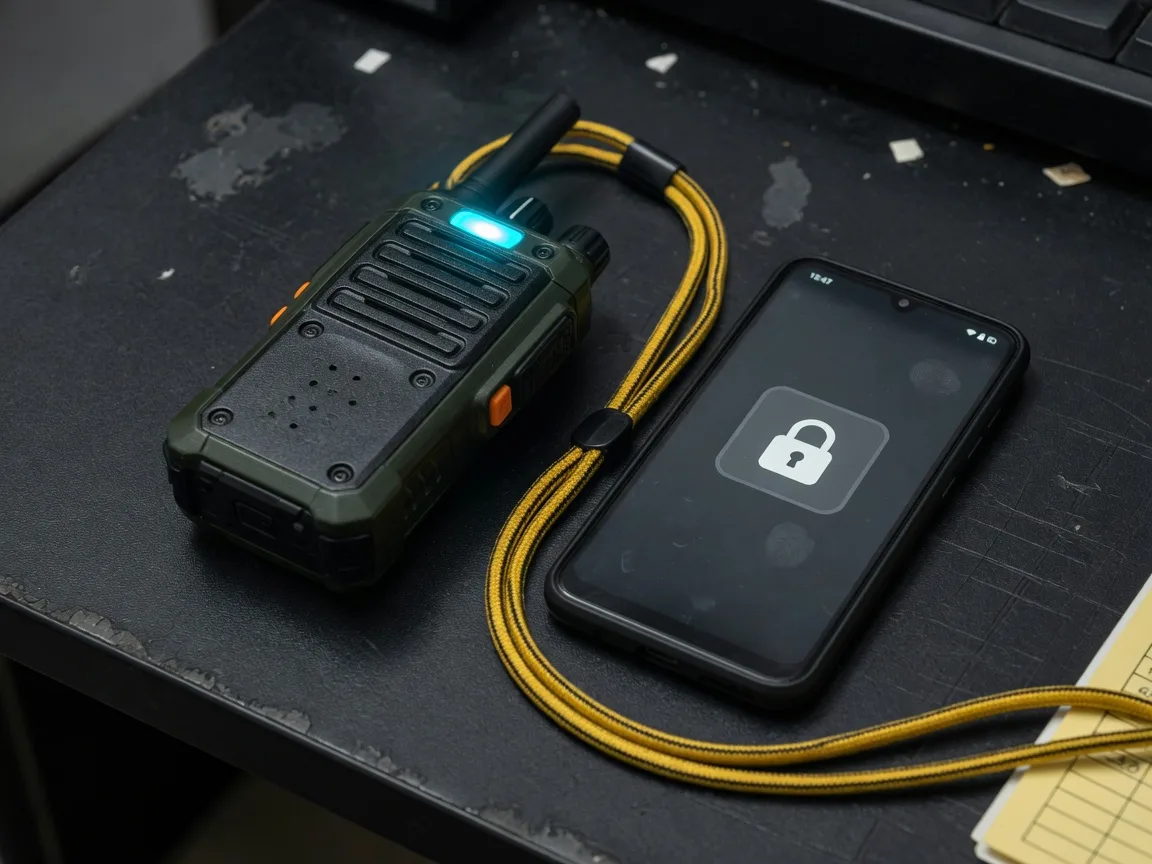
Connect issued radios over cellular with talk groups, floor control, and emergency workflows. Carrier coverage and private-network requirements are scoped for each deployment.
Bring GPS, duty status, battery, and last contact into one operational view. Monitor the devices you issue to your own personnel.
Keep teams in their own talk groups, with shared incident channels when coordination is needed. Access follows the permissions you define.
Plan for dual-SIM, Wi-Fi, and reconnection behavior. Store-and-forward workflows are scoped around the conditions your teams actually encounter.
03 / Build your communications stack
Choose a starting point or scope a complete system. Every engagement begins with a written proposal.
 Hardware + software
Push-to-talk over cellular
Purpose-built handsets, talk groups, and push-to-talk software. Connect teams across sites over available cellular and Wi-Fi networks.



All starting prices are in Canadian dollars for a scoped production engagement. Final scope and pricing are confirmed in your proposal. Applicable taxes are additional.
04 / From requirements to deployment
Teams, devices, coverage, and security. We align the system with the conditions it will work in.
Define teams, permissions, emergency workflows, and the information dispatch needs. These requirements become the agreed scope.
Align handsets, vehicle units, accessories, firmware, and network policy with the operational requirements.
Build the map, talk groups, and replay workflows. Validate the system against the concurrent units and loads in your proposal.
Use transport encryption by default. Scope end-to-end voice and messaging where required, with device and key management included in the design.
05 / A clearer picture
Let’s work through the details that matter to your deployment.
Speak with our engineersThis service is for communications and operational visibility on devices issued to your personnel. It includes talk groups, unit locations, and dispatch workflows. Camera-based analysis is a separate AI Tracking service.
We scope connectivity around the deployment area, including carrier coverage, dual-SIM, Wi-Fi, store-and-forward, and reconnection behavior. Live communications still depend on an available network; discovery establishes the fallback requirements.
Transport encryption is the default. End-to-end encryption for voice and messages is scoped separately, including device identity and key management. See our End-to-End Encryption service for that part of the system.
Personnel monitoring uses information reported by issued devices, such as GPS, duty status, and last contact. AI Tracking uses cameras and sensors. They can be scoped together when a program requires both.
Starting prices in CAD for a scoped production slice. Personnel monitoring from $12,000. 4G PTT from $15,000. Encrypted radio path from $15,000. Command floor from $18,000. A municipal or national radio-plus-floor program is quoted as one engagement.
Your people. Your operation. Your system.
Tell us who is in the field, where they work, and what they need to stay connected. We’ll help shape the system around them.
Discuss your project